How is collaborative work management evolving?
Collaborative work is no longer just about tasks and tools. It’s about how people, AI, and processes connect in real time. Discover why WorkOps is becoming the new standard for managing complex, fast-moving projects in 2026!

Table of contents
Future of work: Key trends in 2026
Collaborative work management 2.0
Collaborative work management vs WorkOps
Core WorkOps principles
Benefits of WorkOps implementation
From chaos to clarity with WorkOps
TL;DR
Collaborative work management is evolving into AI-enhanced, unified ecosystems like WorkOps that connect teams, tools, and workflows for continuous, adaptive value delivery.
Future of work: Key trends in 2026
AI-human collaboration dominates, measuring skills in working with AI teammates for data, and decisions. Hybrid and mobile workforce management integrates cloud apps, automation, and compliance-focused time tracking for flexible operations. Agentic AI systems and power skills (e.g., adaptability) mature alongside blended learning to boost team fluency.
Also, collaborative work management evolves toward unified, AI-augmented ecosystems that prioritize continuous, adaptive workflows over rigid structures.
Collaborative work management 2.0
When discussing collaborative management, envision a decentralized leadership approach where decision-making involves input from all team members, rather than top-down directives from a single authority. This style suits modern, hybrid work environments, boosting fulfillment and revenue.
In any case, collaborative work management is evolving towards unified, AI-powered ecosystems that prioritise continuous, adaptive workflows over rigid structures. WorkOps leads this shift by orchestrating teams, processes, and technology into interconnected loops for seamless value delivery.
Collaborative work management vs WorkOps
Let's break down the differences between these two terms.
While collaborative work management focuses on interpersonal leadership styles that emphasise team input and shared decision-making, WorkOps represents an operational framework that integrates teams, tools, AI and workflows into a continuous ecosystem that extends beyond individual projects.
Core WorkOps principles
WorkOps transforms organizations into flexible ecosystem via an infinite loop of eight phases: planning, delivery, quality, reports, automations, integrations, support, and knowledge.
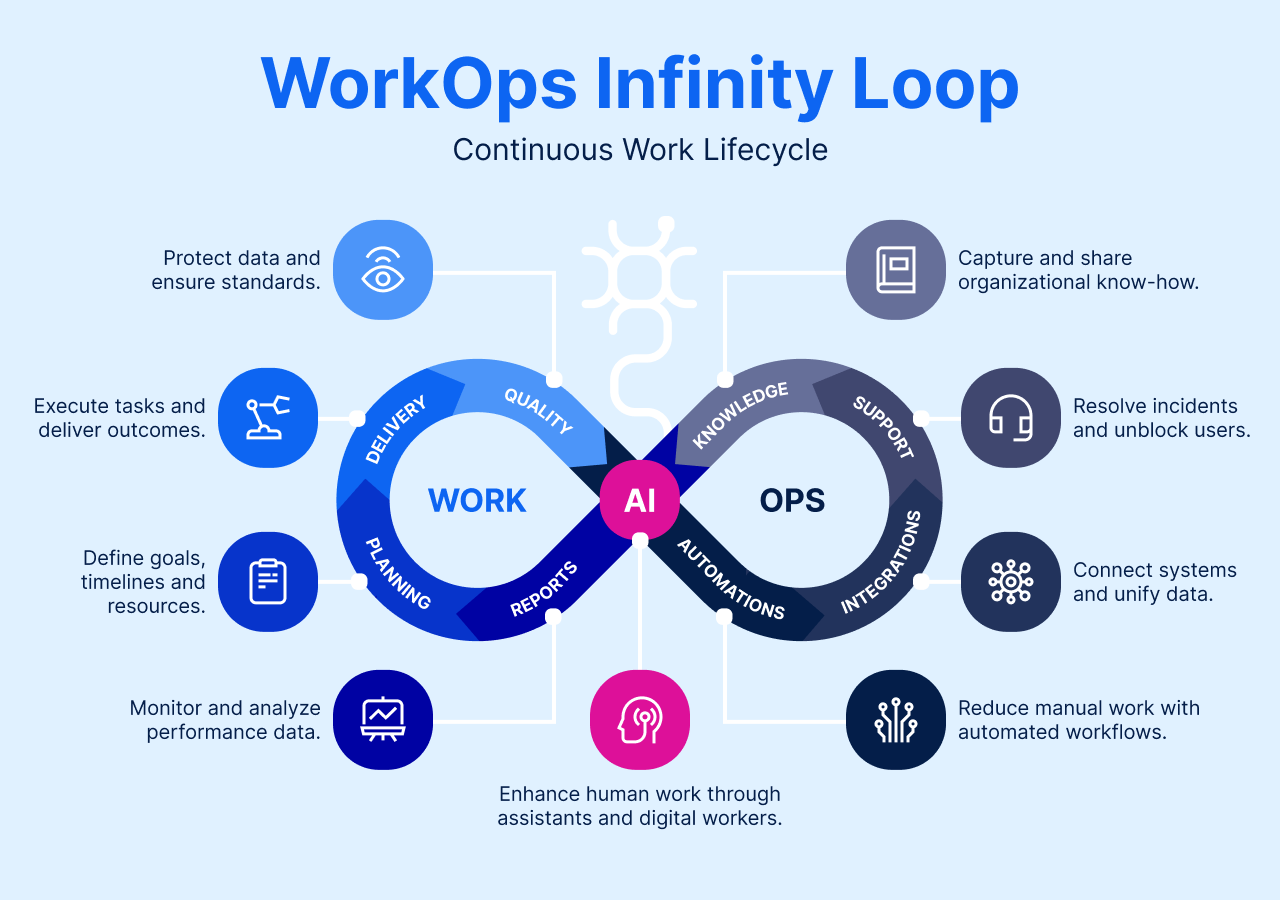
These phases interconnect to enable real-time adaptation, reducing tool fragmentation (often 46+ per enterprise!) through centralized platforms.
Project managers evolve into orchestrators, leveraging AI for routine tasks while focusing on strategic alignment.
Benefits of WorkOps implementation
WorkOps framework brings people, systems, and automation together into one unified platform. So teams will work more effectively, make better decisions and adapt with confidence.
With better-connected tools and clearer workflows, you can:
- deliver results faster,
- keep costs under control,
- scale your operations without added complexity.
WorkOps sustains distributed team speed while ensuring visibility via unified dashboards and automations. Enterprises achieve continuous value flows, cutting silos and enhancing ROI through intelligent, evolving workflows.
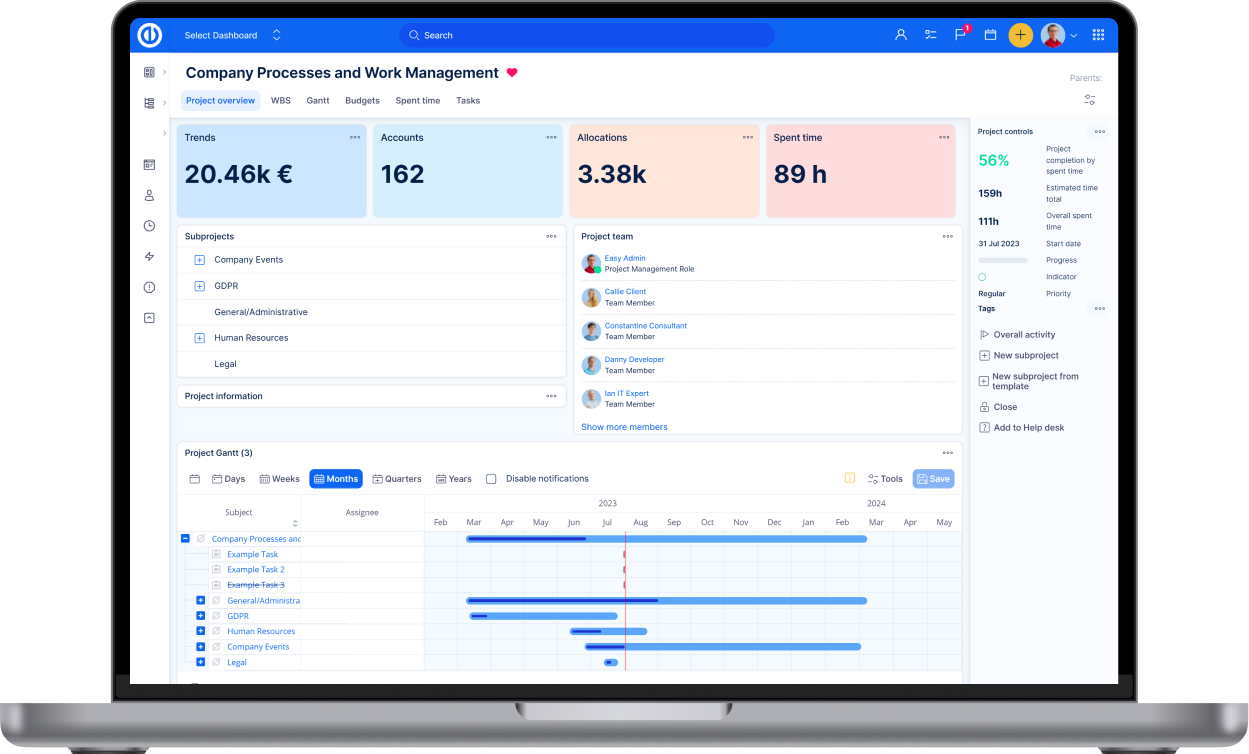
Tools like Easy Redmine support WorkOps methodology with customizable integrations and knowledge bases.
From chaos to clarity with WorkOps
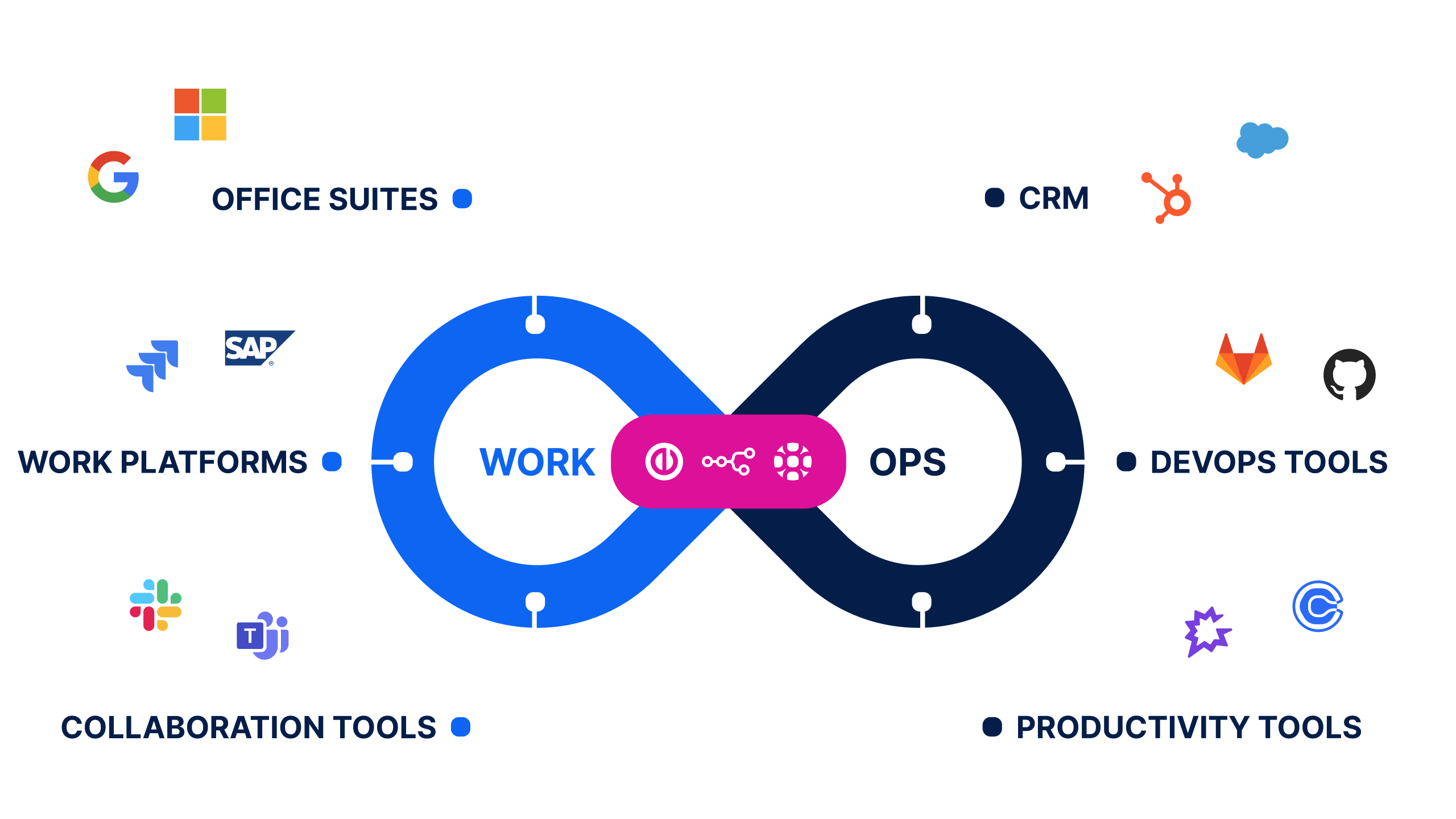
Today’s organisations are held back by disconnected tools, scattered communication, repetitive admin, and unreliable data. That is why collaborative work management is shifting from static task tools to dynamic, AI-powered ecosystems that connect people, data, and workflows in real time.
WorkOps emerges as the leading framework, enabling teams to deliver continuous value through integrated automation, visibility, and adaptive processes.
Curious about how WorkOps could work for you? Reach out to our sales team for a personalised consultation on your best starting point.

Frequently asked questions
Related articles

The WorkOps framework: A new functional model of work
Do you also feel like there is no longer a language to adequately describe modern work? Well, it is because you are not familiar with the WorkOps approach yet. Read more to realise why it all makes sense!

Why is project management not enough? Future of WorkOps explained
Traditional project management was built for a predictable, linear world that no longer exists. Today's problems, such as siloed teams, tool fragmentation, and rapid change, require an ecosystem approach, not project-by-project oversight. WorkOps creates an intelligent, interconnected work environment where automation, AI and humans combine to deliver continuous value. Let's deep dive into the topic.

What is WorkOps?
First came DevOps to fix development, then RevOps to align revenue teams. Now WorkOps arrives to solve the biggest challenge yet: orchestrating how entire organisations get work done in an AI-powered, hyperconnected world. So, what is WorkOps?