The best Atlassian Jira Data Center alternatives
With Atlassian Data Center end of life on the horizon, now is the time to explore reliable on-premises alternatives that keep your projects, teams, and data under full control.
Find the best Jira self-hosted alternative!
- On-premises solution from 25+ users
- Confluence alternative, Service Desk and Bitbucket alternative
- Agile tools and Waterfall project management
- Clear pricing
Top 5 Jira Data Center alternatives
As Atlassian retires Data Center support, EOL is getting a real thing; organisations are seeking a self-hosted Jira alternative. Get proper dive-in information to make the right decision for the replacement of the Atlassian Data Center.
|
Atlassian |
Easy Redmine |
GitLab |
OpenProject |
Redmine |
Tuleap |
|
|---|---|---|---|---|---|---|
| Jira Software | ||||||
| Scrum boards |  |
|
|
|
 |
|
| Kanban boards | |
|
|
|
|
|
| Backlog management | |
|
|
|
|
|
| Sprint planning | |
|
|
|
|
|
| Gantt Charts | |
|
|
|
|
|
| WBS (Mind maps) |  |
|
|
|
|
|
| Resource management | |
|
|
|
|
|
| Agile reporting | |
|
|
|
|
|
| Roadmaps | |
|
|
|
|
|
| Confluence | ||||||
| Wiki / Knowledge Base | |
|
|
|
|
|
| Page templates | |
|
|
|
|
|
| Rich text editor | |
|
|
|
|
|
| Document versioning | |
|
|
|
|
|
| Full-text search | |
|
|
|
|
|
| Team spaces | |
|
|
|
|
|
| Jira Service Management / Service Desk | ||||||
| Ticket management | |
|
|
|
|
|
| SLA tracking | |
|
|
|
|
|
| Customer portal | |
|
|
|
|
|
| Email-to-ticket | |
|
|
|
|
|
| Queue management | |
|
|
|
|
|
| Asset management (CMDB) | |
|
|
|
|
|
| Platform and deployment | ||||||
| On-premises (permanent) | |
|
|
|
|
|
| Cloud deployment | |
|
|
|
|
|
| Git integration | |
|
|
|
|
|
| AI features | |
|
|
|
|
|
| On-premises AI | |
|
|
|
|
|
| GDPR compliance | |
|
|
|
|
|
| ISO 27001 certification | |
|
|
|
|
|


Why consider a Jira Server alternative?
The clock is ticking. Atlassian has announced the end of Data Center by 2029 (EOL). This means no more updates, security patches, or support for your self-hosted infrastructure.
On top of that, there are common Jira negatives:
- Complexity: Steep learning curve with overwhelming features that can be difficult for non-technical teams to adopt.
- Closed-source platform: Proprietary software with no open-source option, limiting transparency and community-driven development.
- Forced migration: Atlassian is pushing all users toward cloud-only subscriptions, removing the on-premises option entirely.
- Costs: On-premises Jira Data Center edition or cloud subscriptions are high long-term costs.
Why is Easy Redmine the #1 Jira self-hosted alternative?
Agile & Waterfall project management in one platform
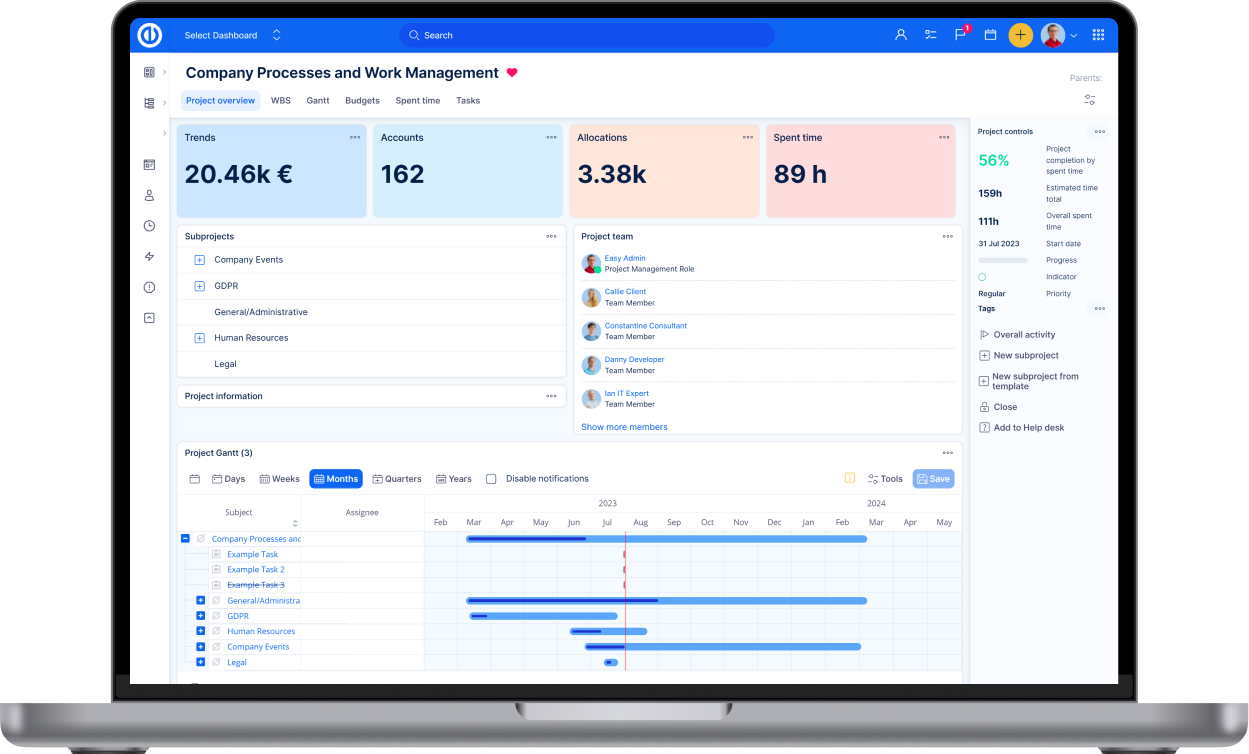
Easy Redmine Agile project management gives Jira users everything they’re used to—and even more with Waterfall features. Plan and track work on customizable Scrum and Kanban boards, manage backlogs and sprints, and link tasks with time tracking, resources, and reporting in just a few clicks.

Confluence self-hosted alternative
The Knowledge Base is a great alternative to Confluence. It centralises essential project, IT, and service information, making it easy for teams to access, share, and reuse know-how across all project phases, reducing duplication and speeding up issue resolution.

Jira Service Desk alternative
The HelpDesk in Easy Redmine integrates with project and service management, enabling efficient ticket handling, SLA tracking and faster issue resolution.
This alternative to Jira Service Desk lets users submit tickets via email or an intuitive interface. It sends automatic notifications, monitors SLA performance, and provides complete visibility into your support operations.

Software development with GitLab integration
While Jira integrates with Bitbucket, Easy Redmine, Jira open source alternative, offers native GitLab integration. This brings repositories, merge requests, commits, and releases right into your project interface, giving your team complete visibility into development progress. All self-hosted, migration fully supported.
Setup is simple: name the repo, insert the URL and token, and then choose between automatic or manual syncing. This enables teams to link commit statuses and log time against tasks for better traceability and informed decision-making.

Workflow Automations and AI agents powered by n8n
With n8n integration you can connect Easy Redmine to over 1,000 apps and build no‑code workflows that sync tasks, trigger actions and reduce manual effort.
By embedding AI agents and automation workflows via n8n your team can get real‑time alerts on risks, automatically escalate issues and standardise processes without constant supervision.

How to easily migrate Jira Data Center to Easy Redmine

Choose between the cloud or server deployment. We recommend starting with the Easy Redmine free trial. Your team can migrate to on-premises at any time.

Our experts will migrate your data from Jira, Confluence, Jira Service Desk and Bitbucket. We replicate your workflows, configurations, and functions to ensure seamless continuity.

See for yourself, side-by-side, that all your projects, issues, and workflows have been accurately transferred and are fully functional in Easy Redmine.
Use Easy Redmine as a Jira on-premises alternative solution
With expert guidance and a structured three‑step process: enumerations migration, interim configuration and customisation, followed by full data import, Easy Redmine makes switching from Jira far less stressful.
Throughout the migration, you retain full visibility over your users, projects and tasks, and after migration, you run thorough user testing so everything works as expected in the new environment.
Case studies of Jira data migration

Data migration from Jira to Easy Redmine: Case study of Aspecta
IT Consulting
Jira handled issue tracking. But Aspecta needed to see the whole picture. Manage resources, budgets, and portfolios in one place. Here's how they made the switch to Easy Redmine.

Data migration from Jira to Easy Redmine: A comprehensive look at Istari Vision
Software Development
In this comprehensive case study, we will take a look at Istari Vision's data migration from Jira Software to Easy Redmine. Learn how Istari Vision took advantage of the opportunities and improved the operational process in an effective way.
Articles and tips about Jira recent news

End of on-premises Jira: Find Jira software alternatives!
Atlassian is a market leader in the project management software industry, with a wide range of popular tools that are used by millions of people around the world. As a market leader, Atlassian has a strong position in the market and can often dictate the direction that its products take. This can include making changes to its tools that are unpopular with some users, such as moving from a Server model to a cloud-based model.
While moving to a cloud-based model can bring many benefits, it can also be disruptive for organizations that are used to the Server model. This can be especially true not only for larger organizations that have significant investments in on-premises infrastructure and processes but also for anyone with a smaller user base.

Break free from Jira Server: Use on-premises alternative
Atlassian ended support for Jira Software Server in February 2024, cutting off updates, bug fixes, and security patches for self-hosted users. With Jira Data Center now the only on-premises option and not a permanent one, many teams are seeking alternatives built for long-term, secure project delivery on their own terms.

The end of Jira on-premises: Atlassian Data Center terminates support
Atlassian is discontinuing Jira Data Center, and with it, the last on-premises option for Jira users. By 2029, support and updates will be gone entirely. The countdown has started: migrate to the cloud, plan a hybrid setup, or find a true on-premises alternative before the clock runs out. The first phase will be here by the end of March 2026.