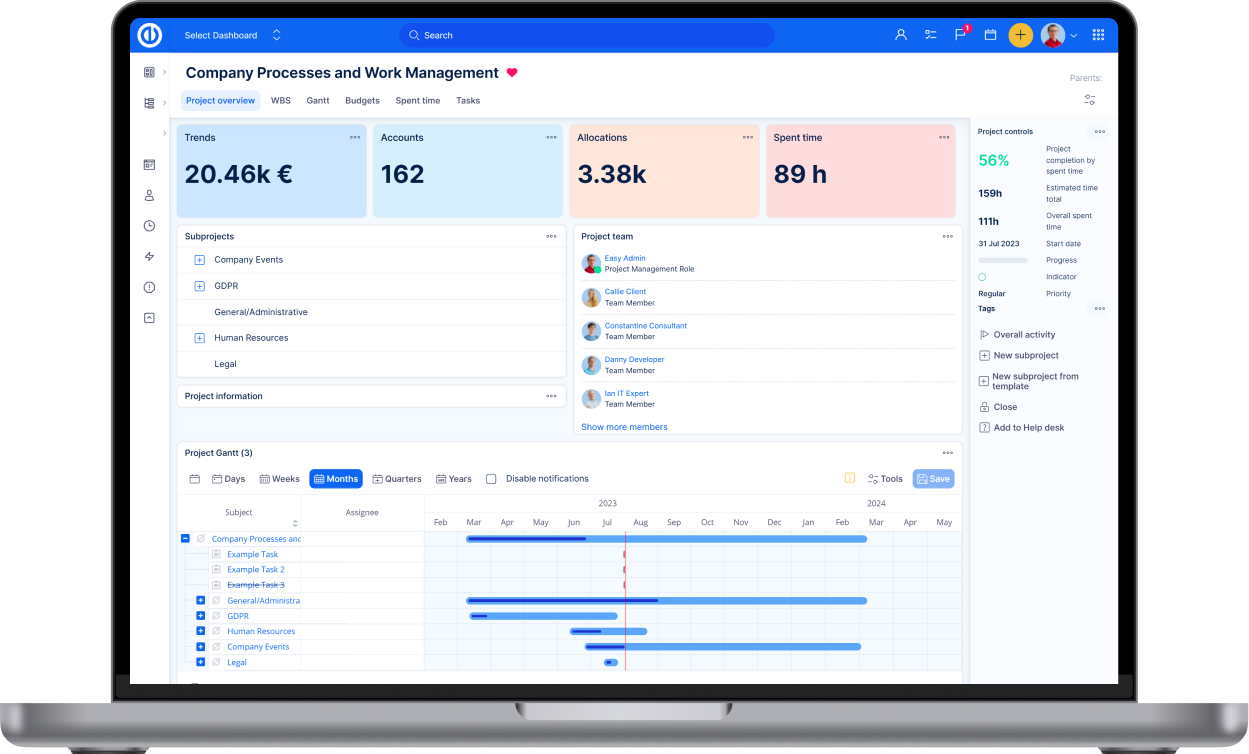
Release notes for version: 15.5.0
Default filters - friendlier entity selection
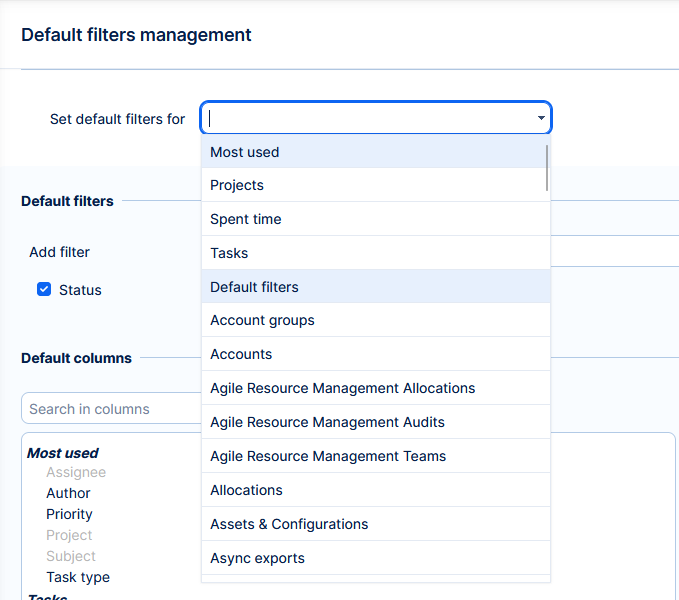
Selection of the entity type in Administration >> Default filters has improved. It is now an autocomplete dropdown, with tasks preset as default.
Unified list exports
Previously
Exporting lists with 25 and fewer items would use the legacy mode - immediately. While bigger lists used asynchronous export, i.e. performance safe running on the background.
Now
Async export is run for lists of all sizes.
Why
Predictability of behaviour; unified export filenames; lowered chance of bugs.
Tagging roles, groups and other global settings
Mostly for companies with independently defined divisions, we bring an option to better navigate in some global configurations, such as roles or groups.
Example
1. Tag roles used by your division
2. Tag users of your division
3. When managing role configuration or project memberships, click your tag to instantly filter only relevant data.
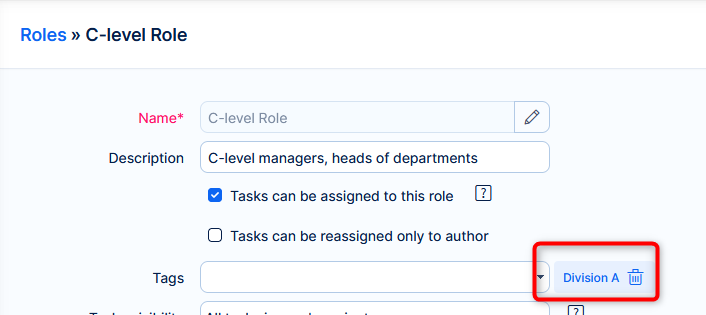
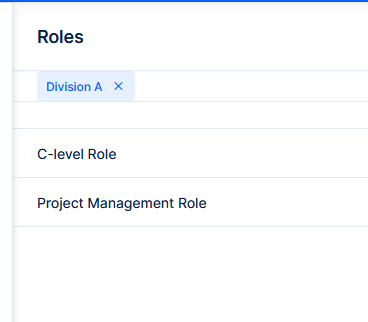
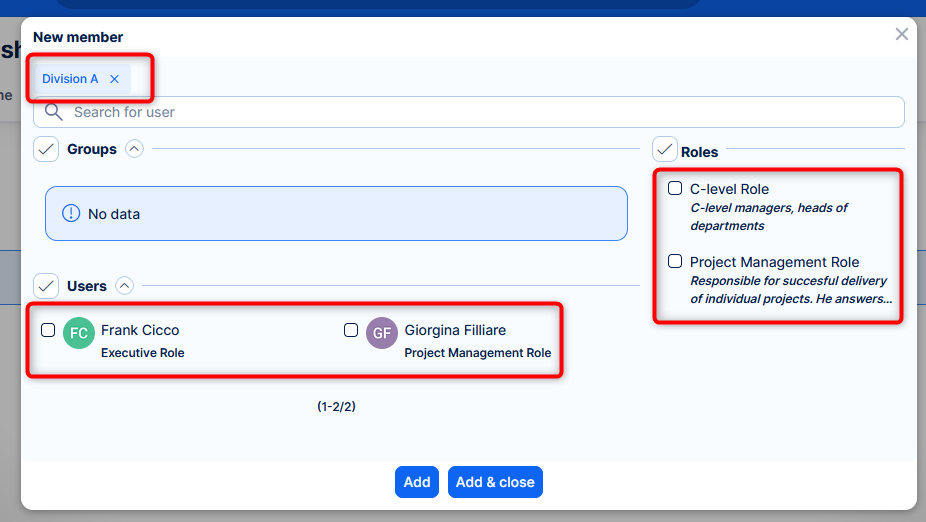
Tagging is also newly available for custom fields, task types, statuses.
AI icons unified
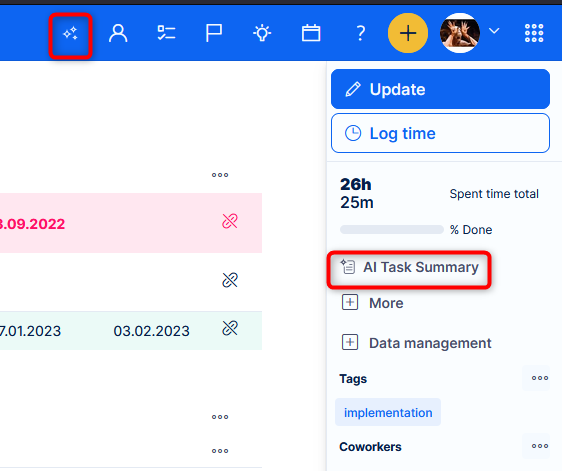
AI features in Easy Redmine and their related access points (buttons, menu items,...) are now always marked with a sparkle, to follow the widely recognized symbol. This is a step to more precisely inform user about potential interaction AI before they choose to do so.
Technological stack
This section is important for Server solution. Cloud users need not worry about any of this.
- OS: Debian 12 on amd64 architecture
- Redmine: upgradable from version 6.0.7
- Ruby: 3.4.7
- Bundler: 2.7.1+
- Rubygems: 3.7.x
- Database: Percona/MySQL 8.0
- redis-server: 8
- NodeJS: 22.18
- Docker engine: 28.3.0
- Docker compose: 2.37.3
Ruby and NodeJS are strictly mandatory, without these versions you will not be able to run Easy Redmine.
✅ Or, forget about the management of technological stack and use Docker deployment. It combines the security of on-premises solution with nearly the comfort of cloud solution.
Before every application upgrade, please carefully refer to all release notes between your existing version and the new version - there may be critical technical or functional changes explained.
To avoid sifting through too many release notes in the future, we recommend updating your application regularly. With Docker updating is very simple, and brings you advantages:
- Latest security fixes
- Latest bug fixes
- Fewer changes at a time - better digestible for your users